Better know an ingredient: SALT
All salt is, or was, sea salt. Mined salt that is harvested from in the ground, and is evaporated sea water. Humans require the mineral salt (sodium chloride) to balance and regulate fluids. (Salt is a rock that we need to eat!)
Table salt is most commonly mined salt. Many forms include the addition of small quantities of postasium iodide, sodium iodide or iodate, and are sold under the moniker of iodize salt. (Iodine is found naturally in kelp but is often added to mined salt. Iodine deficiency can cause serious health concerns including certain forms of mental retardation, and thyroid problems.)
Fleur de sel (flower of the sea), is collected using the traditional Celtic practice of and-harvesting the solar-evaporated crystals from Atlantic marshes in Brittany, France—a technique which dates back over 2000 years.
Grey salt, which is also made in the traditional Celtic method, gaining its purple-grey color from the clay in the salt flats where it is harvested.
Smoked salts
This technique has its roots with the Vikings in Denmark and the Native Americans of the northwest. Evaporated seawater, forming sea salt, is often the base of this complex condiment. The dried crystals are then smoked using a variety of wood chips.
Kosher salt
This refers to the practice of koshering meats, by drawing out the blood with salt. These larger flakes stick to the meat better and are the salt typically used for this practice.
Pink or red salt (Hawaiian or Himalayan)
This usually refers to the red clay that these salts are harvested from, which impart a red to pink hue.
Saltpetre (sometimes referred to as "nitre," "niter," "pickling salt" or "pink salt")
This is actually potassium nitrate and is what keeps corned beef pink, instead of turning gray.
It is also a key component in gunpowder.
Monday, May 11, 2009


Saturday, May 9, 2009
Rice
Better know an ingredient: RICE
The term rice refers to the seed of the plant Oryza sativa, native to Africa. Brown rice is rice that is harvested and has the hull removed. White rice is rice that has been harvested, has the hull removed and the bran is removed as well. The germ of the seed is also removed during this process, thus making white rice more shelf-stable since the fat source has been removed and it will not go rancid or sprout. White rice can be further processed by buffing (using talc or glucose, producing polished rice), or parboiling (producing quick-cooking, converted or minute rice).
Rice is often categorized by size: short-, medium- or long-grain.
-short-grain rice: the grains must be less than two times longer then the width.
-medium-grain rice: grains must be two to three times longer than the width
-long-grain rice: grains must be at lest three times longer than the width
In addition to the size of the grain itself, it these groupings also refer to the amount of starch released during the cooking process; the shorter the grain, the more starch is released, producing a creamier or sticker final cooked product.*
Long-grain examples: Basmati rice, Jasmine rice, Carolina rice, Himalayan red rice, Indian red rice, Kasmati rice, Thai black rice, Wheani rice, Surinam rice, Pecan rice, Texmati rice
Long-grain rices tend to hold their shape and easily fluff or separate after properly cooked.
Medium-grain examples: California medium grain rice, Southern medium grain rice, Black Japonica rice, Chinese black rice, Italian black rice, red rice, Valencia rice, Venus black rice
Medium-grain rices will release some starches and stick together when cooked. Some are used for risottos.
Short-grain examples: glutinous rice (does not contain gluten!), sticky rice, Arborio rice, Mochi rice, sushi rice, bamboo rice, Bhutanese red rice, Bomba rice, Carnaroli rice, Nishiki rice (used for sake production), pearl rice, Roma rice, sweet rice.
Short-grain rices are used when a creamy or sticky finished product is needed, like in the production of risotto or sushi. This category of rice is often ground into "sweet" or "Mochi" rice flour, used in the preparation of sweets and baked goods.
Wild Rice
Wild rice is not technically “rice” because it is a seed of plant in the grass genus Zizania (What is commonly referred to as “rice” is Oryza sativa, which is in the grass family Poaceae.)
*It is more complicated than that. The wiki page on “rice” has links to the different types of sugars common in the different sized grains and their structures.
The term rice refers to the seed of the plant Oryza sativa, native to Africa. Brown rice is rice that is harvested and has the hull removed. White rice is rice that has been harvested, has the hull removed and the bran is removed as well. The germ of the seed is also removed during this process, thus making white rice more shelf-stable since the fat source has been removed and it will not go rancid or sprout. White rice can be further processed by buffing (using talc or glucose, producing polished rice), or parboiling (producing quick-cooking, converted or minute rice).
Rice is often categorized by size: short-, medium- or long-grain.
-short-grain rice: the grains must be less than two times longer then the width.
-medium-grain rice: grains must be two to three times longer than the width
-long-grain rice: grains must be at lest three times longer than the width
In addition to the size of the grain itself, it these groupings also refer to the amount of starch released during the cooking process; the shorter the grain, the more starch is released, producing a creamier or sticker final cooked product.*
Long-grain examples: Basmati rice, Jasmine rice, Carolina rice, Himalayan red rice, Indian red rice, Kasmati rice, Thai black rice, Wheani rice, Surinam rice, Pecan rice, Texmati rice
Long-grain rices tend to hold their shape and easily fluff or separate after properly cooked.
Medium-grain examples: California medium grain rice, Southern medium grain rice, Black Japonica rice, Chinese black rice, Italian black rice, red rice, Valencia rice, Venus black rice
Medium-grain rices will release some starches and stick together when cooked. Some are used for risottos.
Short-grain examples: glutinous rice (does not contain gluten!), sticky rice, Arborio rice, Mochi rice, sushi rice, bamboo rice, Bhutanese red rice, Bomba rice, Carnaroli rice, Nishiki rice (used for sake production), pearl rice, Roma rice, sweet rice.
Short-grain rices are used when a creamy or sticky finished product is needed, like in the production of risotto or sushi. This category of rice is often ground into "sweet" or "Mochi" rice flour, used in the preparation of sweets and baked goods.
Wild Rice
Wild rice is not technically “rice” because it is a seed of plant in the grass genus Zizania (What is commonly referred to as “rice” is Oryza sativa, which is in the grass family Poaceae.)
*It is more complicated than that. The wiki page on “rice” has links to the different types of sugars common in the different sized grains and their structures.
Friday, May 8, 2009
Gluten Free Cake at Starbucks
I wrapped my excitement in skepticism as I approached Starbucks. The gluten free rumblings had put me onto the release of a new product: Valencia Orange Cake, that's gluten free. While cleaning my desk, I found a gift card from two years ago - don't judge, we all procrastinate - and was giddy to see if a gluten free treat could be mine!
I tempered myself, conjuring up all the not-so-great and down-right horrible ____-free products I have tasted. Its not fair to set the bar too high, especially on a company's first try.
Upon reaching the counter I thought I had been thwarted, no orange cake in sight. The barista informed me that they do carry the Valencia Orange Cake, they are tucked behind the counter and individually wrapped for safety. The same cheery fellow commented on how moist and delicious the cake was. I let my enthusiasm shine through a bit and commented: "I am just excited that you even have it!"
The cake was not only moist, it had a small, even crumb. I was afraid it would be overly sweet, but the orange flavor was light; the orange oil flavor much more strongly pronounced than the orange peel or juice. The almond flavor was not very strong either, and without the few sliced almonds dotting the top, I am not sure their contribution would be easily recognized.
VERDICT: Would eat again. More importantly - and increasingly becoming my new measuring stick - it was good enough that I would share this with a gluten-eating friend.
I tempered myself, conjuring up all the not-so-great and down-right horrible ____-free products I have tasted. Its not fair to set the bar too high, especially on a company's first try.
Upon reaching the counter I thought I had been thwarted, no orange cake in sight. The barista informed me that they do carry the Valencia Orange Cake, they are tucked behind the counter and individually wrapped for safety. The same cheery fellow commented on how moist and delicious the cake was. I let my enthusiasm shine through a bit and commented: "I am just excited that you even have it!"
The cake was not only moist, it had a small, even crumb. I was afraid it would be overly sweet, but the orange flavor was light; the orange oil flavor much more strongly pronounced than the orange peel or juice. The almond flavor was not very strong either, and without the few sliced almonds dotting the top, I am not sure their contribution would be easily recognized.
VERDICT: Would eat again. More importantly - and increasingly becoming my new measuring stick - it was good enough that I would share this with a gluten-eating friend.
Wednesday, May 6, 2009
New Ideas
So in the past two weeks at least 4 people have mentioned visiting this blog. (Normally this calls for an exclamation point, maybe even two, but hold on for just a moment.)
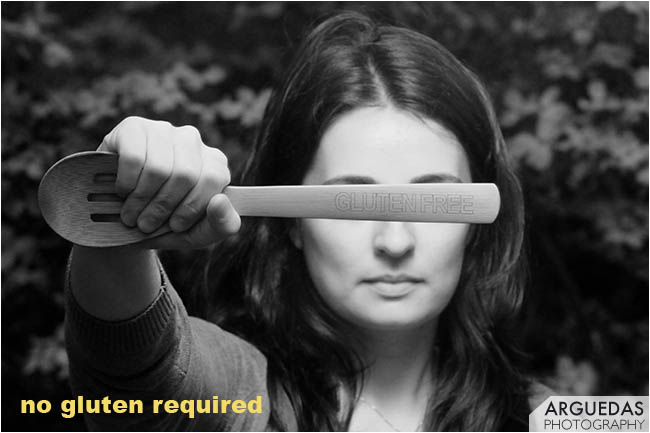
It has come to my attention that the nod to Phil Collins' 1985 Grammy Award Winning No Jacket Required is not being picked up by visitors, rather "oh I have seen your blog, its the one with the, uh, giant scary head, right?" is the general response and vibe.
So perhaps the time has come for a bit of a redesign. (This is me reluctantly getting "it")
I am open to suggestions. What would you rather see than my "giant orange face"?
It has come to my attention that the nod to Phil Collins' 1985 Grammy Award Winning No Jacket Required is not being picked up by visitors, rather "oh I have seen your blog, its the one with the, uh, giant scary head, right?" is the general response and vibe.
So perhaps the time has come for a bit of a redesign. (This is me reluctantly getting "it")
I am open to suggestions. What would you rather see than my "giant orange face"?
Thursday, April 30, 2009
Support H.Con.Res.110!
I know that with swine flu in the air, non-communicable diseases aren't really at the forefront of anyone's mind, especially law makers. Hopefully, the need for adequate health care for all and paid sick days will become national issues - if your neighbor is sick and cannot afford to go to the doctor or stay home, that is your issue too.
If you, friend or loved one has had to battle with insurance or doctors to get properly diagnosed, or even find safe food to eat, you know how importance awareness is, and how it effects access to services. That is why I urge you to support H.Con.Res.110. This bill is proposing recognition, education and funding for celiac disease.
The American Celiac Awareness Alliance has made it easy to contact your House Rep. by filling out this form. It will email your rep asking for them to support H.Con.Res. 110: Supporting the goals and ideals of National Celiac Awareness Month, and for other purposes
You can also go to the House of Representatives website and type in your zip code (upper left) and it will let you know who your Rep is.
On average it takes 7 years in the US for adults to be properly diagnosed with celiac disease. This is too long for people to be in pain. It is costing far too much money in dealing with the complications from untreated celiac disease.
Ok, I am stepping off my soapbox and going back to pondering how to make fluffier gluten free pancakes - I am thinking folding in whipped egg whites might be the key.
If you, friend or loved one has had to battle with insurance or doctors to get properly diagnosed, or even find safe food to eat, you know how importance awareness is, and how it effects access to services. That is why I urge you to support H.Con.Res.110. This bill is proposing recognition, education and funding for celiac disease.
The American Celiac Awareness Alliance has made it easy to contact your House Rep. by filling out this form. It will email your rep asking for them to support H.Con.Res. 110: Supporting the goals and ideals of National Celiac Awareness Month, and for other purposes
You can also go to the House of Representatives website and type in your zip code (upper left) and it will let you know who your Rep is.
On average it takes 7 years in the US for adults to be properly diagnosed with celiac disease. This is too long for people to be in pain. It is costing far too much money in dealing with the complications from untreated celiac disease.
Ok, I am stepping off my soapbox and going back to pondering how to make fluffier gluten free pancakes - I am thinking folding in whipped egg whites might be the key.
Monday, April 27, 2009
Pasta & Artichokes
I love artichokes more than I have words for. When these crazy thistles go on sale its hard for me to stay away. (Market Basket had them for $0.79 each this weekend!)
4 artichokes (this was excessive, but delicious)
1/2 lb rice pasta
2 tbsp olive oil
1 shallot diced (optional)
3 cloves garlic minced
1 can chick peas rinsed
2 tbsp capers+
1/2 lemon
1. Clean, quarter and de-choke the artichokes. (Place in acidulated water till cooking time)
2. Wash off the artichokes, place in clean water, add salt and bring to a boil, then throw in the pasta.
3. In a separate pan over medium-low heat, sweat the shallot and garlic in olive oil. Add the chick peas to warm through.
4. Drain the pasta and artichokes once both are cooked through. (You might need to rinse the pasta - check the directions)
5. Add the garlic, shallots, oil and chick peas to the pasta and artichokes. Add in the capers and squeeze half a lemon over top. Toss and salt to taste.
 I ate substantially more than this portion suggests. It was good!
4 artichokes (this was excessive, but delicious)
1/2 lb rice pasta
2 tbsp olive oil
1 shallot diced (optional)
3 cloves garlic minced
1 can chick peas rinsed
2 tbsp capers+
1/2 lemon
1. Clean, quarter and de-choke the artichokes. (Place in acidulated water till cooking time)
2. Wash off the artichokes, place in clean water, add salt and bring to a boil, then throw in the pasta.
3. In a separate pan over medium-low heat, sweat the shallot and garlic in olive oil. Add the chick peas to warm through.
4. Drain the pasta and artichokes once both are cooked through. (You might need to rinse the pasta - check the directions)
5. Add the garlic, shallots, oil and chick peas to the pasta and artichokes. Add in the capers and squeeze half a lemon over top. Toss and salt to taste.
 I ate substantially more than this portion suggests. It was good!
Saturday, April 25, 2009
Chex Mix: A new take on an old favorite

I have a problem with following directions and buying ingredients that I probably will not use for anything else. Cue me futzing with the Original Chex Mix Recipe and coming up with something new.
Gluten Free Chex Mix
3 cups Rice Chex
3 cups Corn Chex
3 tbsp butter (or margarine if you need it dairy-free)
2 tbsp Worcestershire Sauce (FYI some types contain anchovies, L&P does)
3/4 tsp garlic powder
1/2 tsp Old Bay Seasoning
1/4 tsp ground turmeric
dashes of cayenne pepper
1. Place the butter, sauce and seasonings in a microwaveable bowl. Heat over medium till everything is melted.
2. Add in the cereal, stirring well to coat.
3. Cook the mixture on High for 5 minutes, stirring every 1-2 minutes. *
4. Cool the mixture on a cookie sheet and store in air tight container.
*I found that the microwave I used this was way way way too much time and the Chex started burning. Keep an eye on the little guys.
So I unintentionally used much more Worcestershire than expected, but since I wasn't using the Seasoned Salt, I thought it would be ok. It turned out really well.
 (A more realistic visualization of my munching demands.)
Things that would make this better: Gluten Free Pretzels
Friday, April 24, 2009
I Spy Gluten Free Chex!
The word on the street was that the newly reformulated Chex were coming in June 2009, Corn and Honey Nut flavors joining Gluten-Free Rice Chex. Much to my surprise I saw Gluten-Free Corn Chex last night at the corner market! (The Inman Square Supermarket to be exact. They are home to the hands-down nicest, most friendly staff ever.)
I have visions of weekend Chex Mix dancing through my head!
I have visions of weekend Chex Mix dancing through my head!
Saturday, April 18, 2009
Time to scream

A hint of warm weather and a birthday party means ice cream.
I saw David Lebovitz's vanilla ice cream recipe and tinkered with it a bit.
Cherry Vanilla Ice Cream w/Greek Yogurt
2 cups whipping cream
1/2 cup of half and half
3/4 cup sugar
1 whole vanilla bean, split & scraped
pinch of kosher salt
4 egg yolks
10oz. strained Greek yogurt (I used Fage 5%)
pitted cherries, chopped
1. Place the cream, half and half, sugar, vanilla bean and pulp and salt into a sauce pain. Heat over medium heat until it just begins to bubble. DO NOT BOIL
2. Turn the heat off and in a separate bowl, whisk the yolks together. Very slowly, add a spoonful of the hot cream mixture to the eggs yolks, whisking constantly. Once you have added about half of the cream mixture, poor the yolk mixture into the remaining cream in the pot, stir while adding.
3. Over medium-low heat, while constantly stirring, cook the mixture until it thickens enough to coat the back of a spoon. REALLY REALLY DO NOT BOIL THIS
4. Allow the mixture to cool and stir in the yogurt.
5. Place the mixture into an ice cream machine and let it go until its just past the soft serve stage and beginning to build up on the sides and paddles.
6. Add the cherries and place mixture into freezer to set up.*
7. Freeze over night... or as long as you possibly have. (Mine set up in 10 hours)
*You can add the cherries while its in the ice cream machine, but they will get banged up and change the color of your ice cream. I layered the cherries into the ice cream as I scooped it into the container destined for the freezer.

I also made some salted caramel almonds for crushing and putting on top. (1 cup sugar, 1 tbsp water, 1/2 tsp salt, boiled till dark. Throw in nuts, pour out on to SilPat, cool and then chop up)


This was a lot richer than I expected it to be, but in a good way.
Friday, April 17, 2009
May is National Celiac Awareness Month... in New Hampshire
So there is some debate [or overlap] over when National Celiac Awareness Month is. Some say April, some May and others October.
This just in from the American Celiac Disease Alliance: Governor John H. Lynch of New Hampshire has declared May National Celiac Awareness Month in New Hampshire.
There seems to be a shift underway with organizations and countries moving towards recognizing May as the month for acknowledging Celiac Disease awareness in the US and abroad. My internal compass says north is the way to head, so May is when I shall be celebrating.
This just in from the American Celiac Disease Alliance: Governor John H. Lynch of New Hampshire has declared May National Celiac Awareness Month in New Hampshire.
There seems to be a shift underway with organizations and countries moving towards recognizing May as the month for acknowledging Celiac Disease awareness in the US and abroad. My internal compass says north is the way to head, so May is when I shall be celebrating.
Subscribe to:
Posts (Atom)

