analytics

Wednesday, May 28, 2014

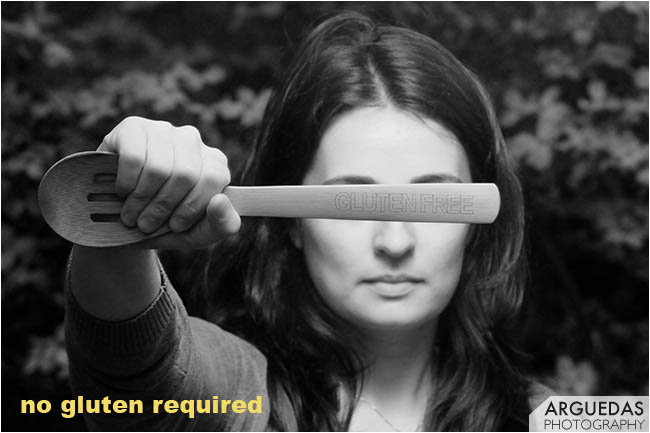
it is all in your head

A few people have been asking me my thoughts on the new search study out of Australia. (And subsequent articles with inflammatory titles.) All of my responses have started with an audible sigh.

Bacteria existed before we had microscopes to see them. Just because we don't have a western medical test to "prove" someone has a disease/intolerance doesn't negate the illness, nor should it prevent her from trying an elimination diet. The media has offered a bizarre double-edge sword where people are simultaneously painted as irresponsible for not taking charge of their own health and belittled for trying alternative, non-western pharmaceutical options.

I am fine with a million more news stories clearly explaining that a gluten-free diet is not an effective tool for weight-loss. It is great if we continue to highlight that a gluten-free diet can cause nutritional deficiencies. But let's also include the fact that most of the processed gluten-containing foods are fortified with additional vitamins and minerals because they too are highly-processed and if you ate them all the ding-dang time you would have nutritional deficiencies. The difference is, instead of promoting the eating of more vegetables, food companies have added these essential vitamins and minerals into foods that normally don't contain them (or contain very little, or did contain them but where processed out).

I am also a big fan of more research; a lone study of 37 people in Australia does not conclusive make. So let's keep funding research, let's keep talking about alternatives to non-celiac gluten sensitivity/intolerance, but let's also keep these conversations grounded in the fact that there is a lot more we don't know.

When I joined celiac.com's message boards back in ye ole 2007, shampoo and face wash was a hot topic. Some people were noticing skin and digestive reactions when using products containing gluten. Others chimed in that there was no research proving one could react to gluten if it isn't ingested through the mouth and that clearly these people were: hypochondriacs, liars, attention seekers, aka "it was all in their head". This cutting hatred and dismissal of people who were in pain, or just seeking information, was part of the reason I departed. I don't see the point in negating people's experience, especially if we don't understand it. And now there are a bunch of gluten-free body-care products and growing awareness that if you slather things on your face it is pretty likely you are going to get some on your lips and in your mouth.

I think what is the most interesting out of this week of everyone-becoming-an-internet-expert-on-who-should-and-shouldn't-eat-gluten is the fact that people are breezing by the fact that the Australian study posited that people were having reactions/issue to other things: FODMAPS. So if by eliminating gluten are eliminating what is causing you discomfort/symptoms/reactions... isn't that a good thing? If a gluten-free or better yet an elimination diet is the key or gateway to figuring out what is wrong and feeling better, isn't that the goal?

So yes, more research, but until then let's be more support of those who are trying to get well and stay well rather than drawing more lines in the sand.

Wednesday, April 16, 2014

ce ce ce celia - a gluten free beer


I tried Celia beer a little over a year ago and really didn't like it. Maybe it was an off-batch, maybe I have grown and my tastes have changed... it doesn't much matter because it is great. It is hands-down the best gluten-free beer I have tasted.

It is actually the only gluten-free beer I have come across that actually has pronounced hops. That's right folks, this isn't a weird cloying-ly sweet beer, and it is also devoid of that strong sour finish that most sorghum-based gf beers suffer from. The texture is also the closest I have come to "real beer". For those who have read all of my beer reviews, one of my largest complaints is lack of adequate carbonation. This beer has it!

This beer is solid enough that it is the first I have served to gluten-mouths at a party... and people enjoyed and went back for seconds. The use of orange peel is genius, and while it is a little heavy for everyday, it clearly stood up to my Indian food left overs. (This is probably a horrible pairing; spicy curries go great with sweet wines and light beers, but I like to call dinnertime the time to randomly pick things out of the fridge like taste-bud roulette.)

Three cheers for a local beer company doing it right!

Thursday, April 10, 2014

who gets to go out to eat (safely)

Yesterday's food section included "With more patrons with food allergies, restaurants cater to every need". I was excited to hear about chefs taking food allergies and sensitivities seriously. I was grateful for the inclusion of a famous chef being denied service because of his son's food allergies. This is stuff we deal with all the time.

But I was still left with a bad taste in my mouth. It is clear that even with the 2009 passing of Bill S.2701, there aren't universal standards for how to "handle" food allergies in restaurant kitchens. Don't get me wrong, things are a lot better. Awareness has significantly increased. But this article points to the fact that not all of these chefs, and their kitchen and front-of-house staffs, are doing the same thing. Some are using separate preparation surfaces, some aren't.

The other elephant in this article is that only high-end restaurants were profiled. This begs the question of who can afford a safe meal? I understand the allure of profiling high-end chefs and famous restaurants. It makes sense; it drives readership; I get it. I am really excited that a chef at Clio has Celiac Disease. I wish I could check out what she is offering, but it is just not financially feasible. And I am ok with that. I am not saying the because I have Celiac Disease I should be able to eat at Clio. What I think we need to talk more about it what does it really cost to prepare a meal safely for those with food allergies/sensitivities?

Those of us saddled with the task of trying to find safe food know that you don't go out to eat to a new place for the first time on a weekend. You don't go the night of a menu change. You don't go on a Monday when most chefs have their day off. You don't go to a new place during a lunch or dinner rush. You do ask a lot of questions. You do leave if you don't feel comfortable. And you do tip very well if the staff works as a team to get it right.

These are not "tips" they are essentials for not being poisoned.

I don't think you can talk about allergy awareness without highlighting all of the invisible work* that goes into getting it right. This article talks about some of this work from the chef's side, but ignores the diners experience, except for the person who asked for a gluten-free meal and then eats a conventional dinner roll.

For a second can we please just imagine that I am going out for dinner and my friend orders a gluten-free meal with me, so we can share (because I have the most awesome friends) and she still eats from the glutenrific bread basket. There are lots of different types of food negotiations happening. Granted, there are those who are selectively choosing when and when not to eat gluten, but that doesn't mean it is ok to be dismissive. How we eat, who we eat with, and sharing food is really complicated.

It is really complicated. And it is more complicated than the Globe piece points out. Nonetheless I am grateful to hear about more places taking things more seriously and offering more options. I am still hoping for more.

*I am invoking/borrowing Marjorie Devault's ideas here because food allergies make visible so much surrounding food safety, preparation, and knowledge acquisition required to get it right. 

Sunday, March 23, 2014

Buzzfeed list giffin close to home

#21 feels a bit too real. Someone at buzzfeed really gets medically-required gluten free living. 

Thursday, March 6, 2014

pistachio liqueur

I love pistachios so much that when a friend offered me a sip of Dumante, a pistachio liqueur, I nearly tackled someone as I lunged towards the cup. Sadly, I was left a little wanting. It had pistachio flavor, but it was really light and gentle. (Pistachios are the most aggressive nut, but this didn't sing to me.)

I found a recipe online for pistachio liqueur, but I wondered how it would turn out if I omitted the spices. Some further research - via misspelling liqueur "liquore", lead me to the glorious discovery that Sicilians make a "creamy" style. Recipes seem to vary between adding actual cows milk cream, or blending the pistachios down and soaking them in alcohol so it is a bit of a nut milk infused booze.

I decided to start with the dairy-free style and see if I could attempt a clear liqueur.

I purchased half a pound of unsalted in-the-shell pistachios, and then shelled them.


Then I rough-chopped them, and it yielded a scant cup of meat.


I added them to a Ball jar (yes I put nuts in a ball jar), and covered them with 750ml of vodka.


I hemmed and hawed about it, but decided I did in fact really want some beautiful vanilla to join the party. I had Madagascar and Tahitian on hand. Smelling both, the Tahitian was the clear winner since it is a much lighter, fruit-ier vanilla, and I am hopefully it will play nicely with the nuts.


Then I took a blurry picture of nuts settling with the bean.


I labeled the jar and made a pact with myself to shake it every few days and taste it after two weeks.

Wednesday, February 19, 2014

searching for authentic ethnic food

I saw this comic and shouted "yes yes yes!" at the screen.

Shing Yin Khor does a beautiful job of walking the reader through her character's experience of her foodways and how other people view them. She gently and then strongly forces the other character searching for the ability to label something authentic (and the reader), to acknowledge what that means and what it erases.

Her work toes the line of showing and telling. Khor does this with grace, weaving in stories of what people perceive her to eat, want her to eat, and what she does it, and then hits you with strong declarations:

"We're a people, not a cuisine.

Do not deny us our own diversity".

I could gush on how this should be mandatory reading in every food studies, anthropology, and sociology class, and how it every "food blogger" should have to meaningfully engage with the piece and never use the words "ethnic cuisine" again... but just go read it. I promise we can have as hearty a discussion as you like in the comments section.


Tuesday, February 11, 2014

gluten free alcohol - new rules

I tried Omission beer and really fell in love with it. Heck it is a gluten-removed beer, so real beer. The problem was, shortly after I was polishing a post about it, I read that the ELISA tests that Omission uses is not sensitive to be less than 20ppm accurate. I decided hold off on blogging and to email Omission directly about their testing policies. One of their reps said they would look into it and get back to me. Well that was in March of 2013... I am still waiting.

So I have chosen not to drink Omission, or Dura, or any of the other gluten-removed beers. It doesn't seem worth the risk, especially with all of the confusion. (Most of the confusion is because in the U.S. alcohol does not have to be labeled the way food does; it is actually a separate governmental agency Alcohol, Tobacco, and Firearms, that deals with labeling, not the FDA.)

Today ATT released a revised policy on gluten in alcoholic beverages and spirits. This is huge because there are now rules about what alcoholic beverages can (and can't) be labeled gluten-free. The gluten-removed beers, they cannot use the term. I hope this helps everyone, but especially the newly diagnosed, better navigate the world of beverages.

Thanks to Gluten Free Fun for sharing the news.


Thursday, February 6, 2014

This is last time I want to ever see the word "glutard"

Hey humans stop using the word "glutard". It is offensive, crude, and inappropriate.

Still not convinced...
"Glutard" is a co-opting of language. It is glutenizing of the word retard.

The word "retard" or "retarded" has been used to systematically take away the rights, power, agency, and humanity from those with different physical appearances and different perceived capabilities. It is used to exclude people. It is used to hurt people as a synonym for "stupid".

"Glutard" is also incredibly reductionist. I am more than my ability to have an autoimmune reaction to gluten. I am not saying we shouldn't discuss important health issues, we should keep doing this, but there is nothing to be gained by invoking hate speech + gluten.

There are plenty of words to describe not being able to eat gluten without invoking terms that ableist and cruel. Let's prevent this term from "catching on". Let's stop using this word forever. 

Tuesday, November 26, 2013

Thanksgiving recipes, tips, tricks

It is my favorite time of year - THANKSGIVING
It is a great holiday for eating, being grateful, while surrounded by friends and family. It is truly the best! 
Here is my annual round out of tips and recipes. I hope you have a fantastic Thursday and fun cooking your way to it. 

Planning ahead tips - for the newly gf or new-to-hosting-someone-gluten-free
Brining a turkeyCooking a turkey Brining and cooking a duck Stuffing (aka dressing)
cranberry orange saucecranberry apple saucestuffed mushrooms
brioche 
vegan sweet potato cornbread
homemade crackers
chex mix 
apple pie
vegan pumpkin custard
pumpkin pie 
English toffee


buttermilk brioche (you could turn them into rolls by doling them out into muffin tins)

Wednesday, October 2, 2013

how difficult is it to be gluten free

Jennifer Esposito's recent interview got a few wheels turning. Is it actually harder now than it was 4 years ago to be gluten free? Are there really no resources "out there" for Jennifer (and the millions of other humans who need to live gluten free)? 

When people are first diagnosed I cut them a lot of slack. I offer them advice. I tell others to be care, generous, and above all forgiving. When you are first figuring out the gluten-free landscape it can feel overwhelming and one can be prone to hyperbole. But after 4 years, perspective should have set in. There are now more gluten-free cookbooks, online resources, guides, friends, and medical professions who know what gluten is. It is far from perfect, but it is leaps and bounds better. It is also millions of times easier to find information than if you were diagnosed before the mid-90s... you know before the internet. 

I think we need a time out to talk about privilege. Gluten-free privilege looks like this:

If you had the ability to google anything about celiac disease or gluten
If you have the free time do research about gluten
You have a computer
People listen to you when you say your are ill
You found a doctor who would work with you and doesn't say its all in your head
You have a doctor
You have health insurance
You have the time and money to go to multiple doctors visits
You have paid sick time to have medical tests done like an endoscopy and colonoscopy
If you made it this far down the list, there is a high probability that you are white and not suffering from other healthcare disparities 
You have choices in what you get to eat and when
You have access to gluten free replacement foods (like gf bread)
You can afford gluten free replacement foods
You can afford the time and money to research gluten-free options
You have a platform where people listen to you (cough blogging cough)
You have access to gluten free recipes, cookbooks, guides

So why does this matter?

In the US, right now, 15% of people live at or below the poverty line ($23,050 or less a  year for a family of four). That is over 45 million people. It is actually a lot more complicate. Let's put this in perspective. The average actual cost of living for a family of 5 in the US is $58,627 a year. 

There are millions of Americans who don't have access to time, information, or money to buy gluten-free replacement foods. Millions of Americans don't have the privilege that Jennifer does, or that I do. There are people who won't get a chance this year to find out that by not eating gluten, she could feel a whole lot better. 

The second big problem I have with Esposito's comment is the fact that it has the effect of erasing people. By saying that there aren't any resources out there, she is blanketing decades of research, books, advocacy, and lives of people who helped make it possible for her to be diagnosed as having celiac disease and have something to eat before she opened her bakery. 

Jennifer, as does everyone, has the right to feel alone and frustrated with the current gluten-free marketplace in the US. It can be incredibly difficult to navigate through misinformation, cross-contamination, and feel like you are constantly having to educate others. It can be exhausting. But we need to acknowledge that we aren't the first human beings dealing with this and that things would be a lot more difficult with the incredible work of other people who shared recipes, engaged in scientific research without the funding of drug companies, provided support networks in-person and online, and made safe gf food options available before yesterday. Ignoring those people, erasing them from history, that doesn't help us at all. It hurts us.